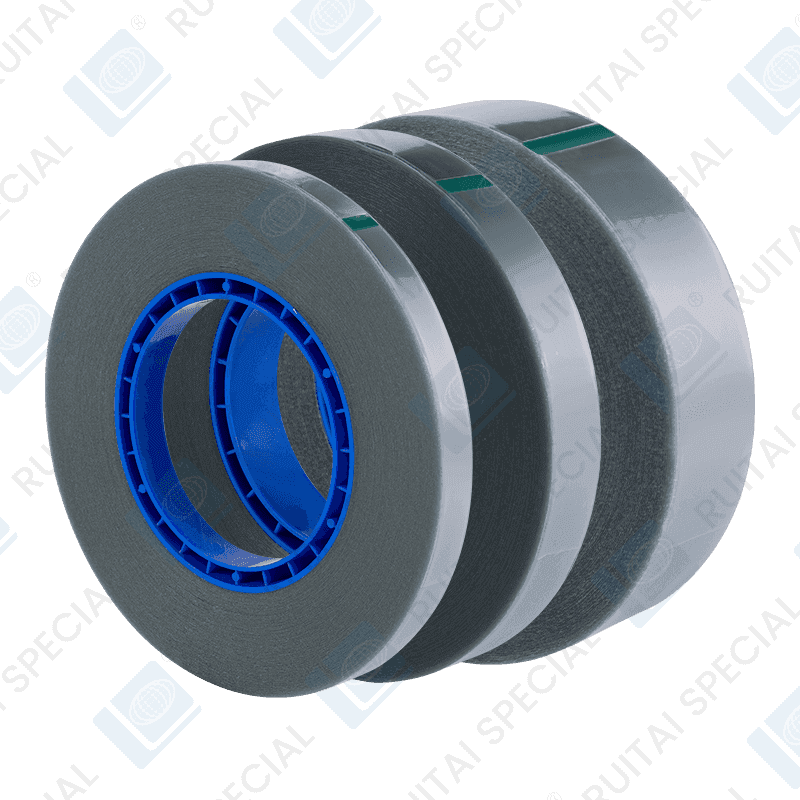
How Pressure Sensitive Adhesive Technology Works in Cover Tape Applications
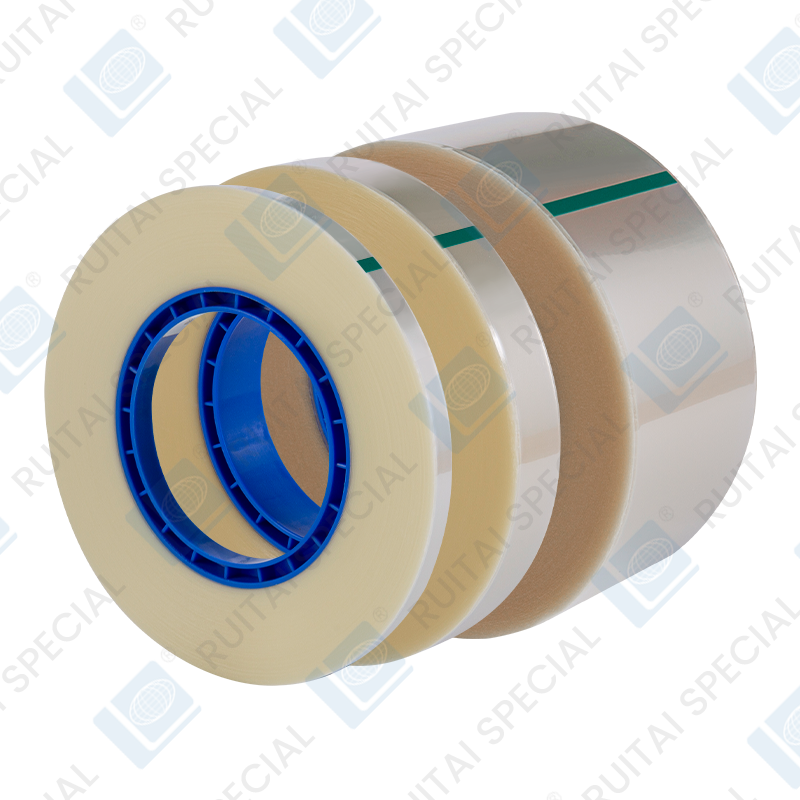
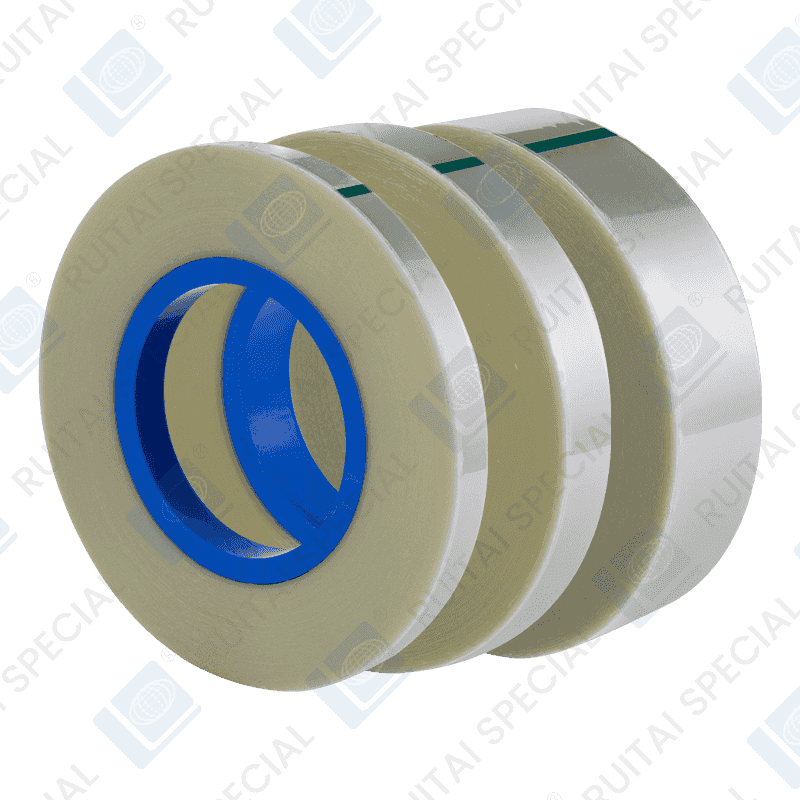
Unlike heat-activated systems that require thermal energy to form a bond, pressure sensitive adhesive cover tape bonds instantly upon contact with the carrier tape rail under applied pressure. The adhesive layer is permanently tacky at room temperature — a viscoelastic material that deforms under load to achieve intimate contact with the carrier surface, then recovers elastically to maintain that contact over time.
This bonding mechanism has direct implications for sealing equipment requirements. PSA cover tape can be applied with a simple roller or pressure bar without temperature control, making it compatible with a wider range of taping machines and reducing equipment complexity on packaging lines that handle multiple component types with frequent changeovers. The absence of a thermal activation step also eliminates the warm-up and cool-down time associated with heated sealing bars, which supports faster line restarts after maintenance or tape splicing.
Ruital Electronics engineers PSA cover tape adhesive formulations with defined tack, peel adhesion, and cohesive strength profiles — balancing the need for secure component retention during transport against the controlled, consistent release force required by high-speed pick-and-place equipment.
Peel Force Management: The Central Challenge in PSA Cover Tape Selection
Peel force is the single most operationally critical parameter for PSA cover tape in automated assembly. IEC 60286-3 defines acceptable peel force ranges for component packaging, but the practical challenge is maintaining peel force within handler specifications across an entire production reel — not just at the qualification sample level.
PSA systems are inherently more sensitive to environmental variables than heat-activated alternatives. Three factors most commonly cause peel force variation in production:
- Ambient temperature: PSA adhesive viscoelasticity is temperature-dependent. Peel force increases as temperature drops and decreases at elevated temperatures. Lines operating without climate control can experience significant peel force shifts across seasonal temperature changes or even within a single shift.
- Dwell time after sealing: PSA adhesive contact area with the carrier rail increases over time as the adhesive continues to flow into surface microstructure. Reels sealed and immediately fed to placement machines may exhibit lower peel force than reels that have rested for several hours — a variable that affects lines running just-in-time packaging operations.
- Carrier tape surface condition: Mold release agents, antistatic additives, and handling contamination on carrier tape sealing rails reduce effective adhesive contact and produce inconsistent seal strength between reels from different carrier lots.
Robust PSA tape qualification documents peel force across the full expected temperature range of the production environment, not only at standard laboratory conditions of 23°C and 50% relative humidity.
Carrier Tape Substrate Compatibility and Adhesive Residue Control
PSA cover tape performance cannot be evaluated in isolation from the carrier tape substrate it seals against. Carrier tapes are manufactured from polystyrene (PS), polycarbonate (PC), and ABS, each presenting different surface energies that determine how completely the PSA adhesive wets the sealing rail. A tape formulation optimized for PS carriers may deliver insufficient peel force on PC carriers under identical sealing pressure, or leave adhesive residue on ABS carriers with rough textured rail surfaces.
Adhesive residue after peel is a particularly consequential failure mode in electronics packaging. Residue deposited on carrier tape sealing rails accumulates across repeated reel passes through feeder mechanisms, eventually causing feeding irregularities. Residue transferred to component contact surfaces — even in trace amounts — can impair solderability or cause contact resistance failures that manifest only after board assembly. Residue-free peel performance must be verified on the actual carrier tape substrates used in production, not assumed from general-purpose datasheet claims.
Optical clarity is a further compatibility consideration. Vision systems on modern SMT placement machines verify component presence and orientation through the cover tape before the peel step. PSA tape film haze values must meet the transmission threshold of the specific camera and illumination system in use — a parameter that varies significantly between equipment manufacturers and is often tighter than generic industry minimums.
Antistatic PSA Cover Tape: Balancing ESD Protection with Adhesive Performance
For ESD-sensitive component packaging, antistatic PSA cover tape introduces a formulation trade-off that is rarely discussed explicitly in product datasheets. Antistatic agents — whether surface-applied or compounded into the film — alter the surface energy of the backing and can interact with the adhesive layer, shifting tack and cohesive strength relative to standard non-antistatic grades of nominally the same tape construction.
This interaction means that process parameters qualified on standard PSA cover tape cannot be directly transferred to antistatic grades without requalification. Peel force, sealing pressure requirements, and residue behavior should all be reverified when switching between antistatic and non-antistatic variants, even from the same supplier.
Surface resistance values for antistatic PSA tape should also be verified after simulated storage aging — elevated temperature and humidity exposure — since some antistatic treatments degrade over the shelf life of a production reel. With advanced adhesive formulation technology and dedicated quality verification across both mechanical and electrostatic performance parameters, Ruital Electronics ensures that antistatic PSA cover tape products maintain consistent surface resistance and peel force throughout their rated shelf life, supporting reliable ESD-safe packaging across high-volume semiconductor production environments.


 USA
USA English
 日本語
日本語 中文简体
中文简体