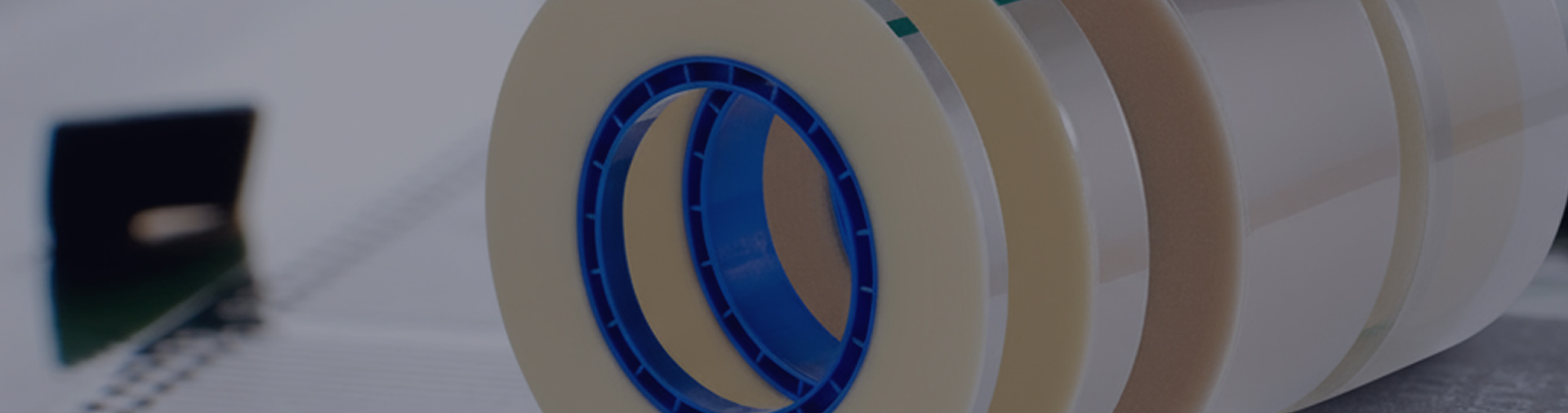
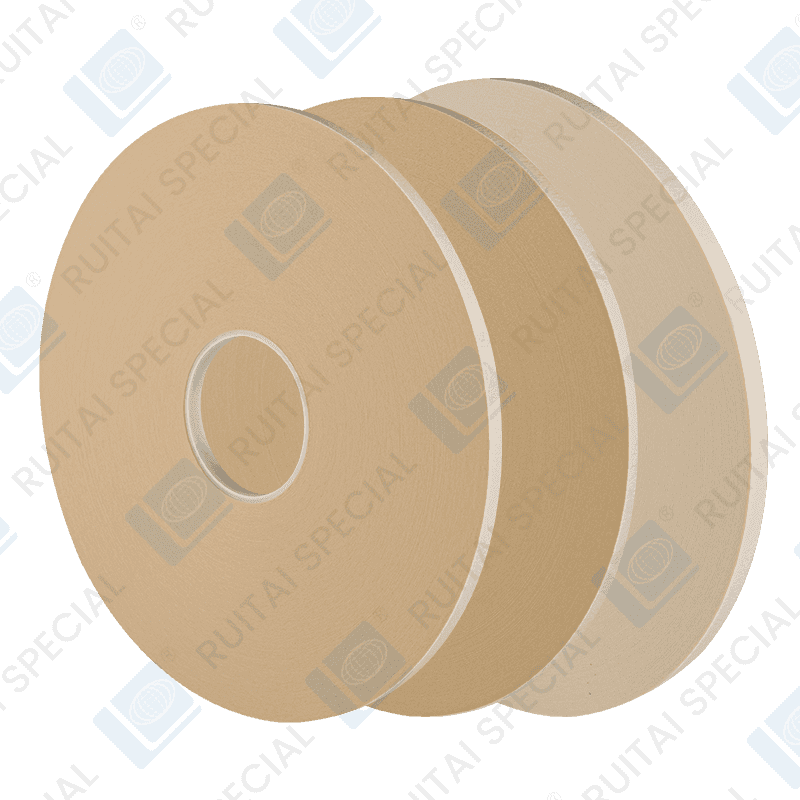
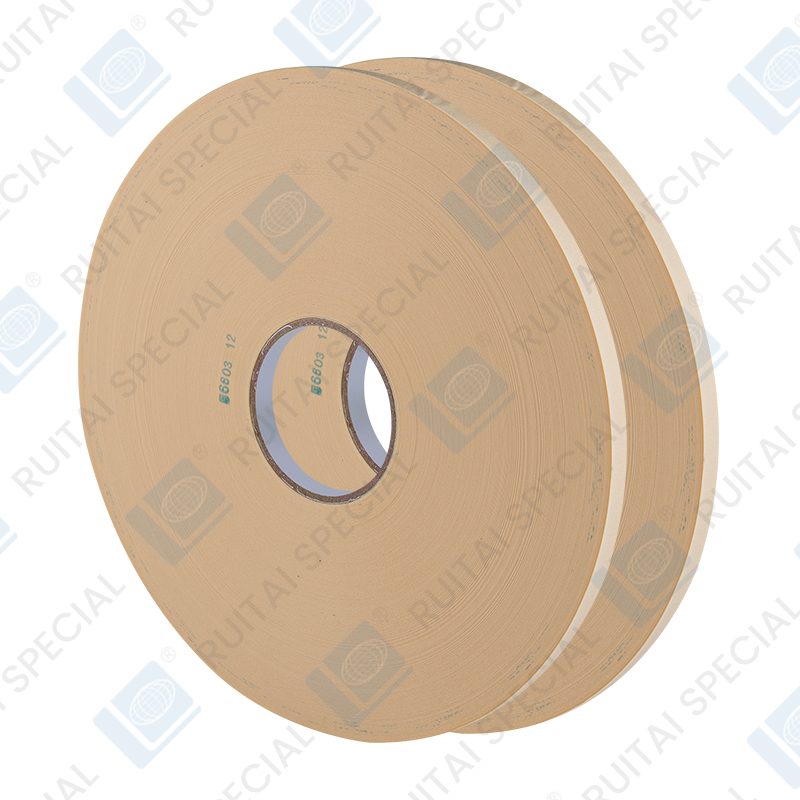
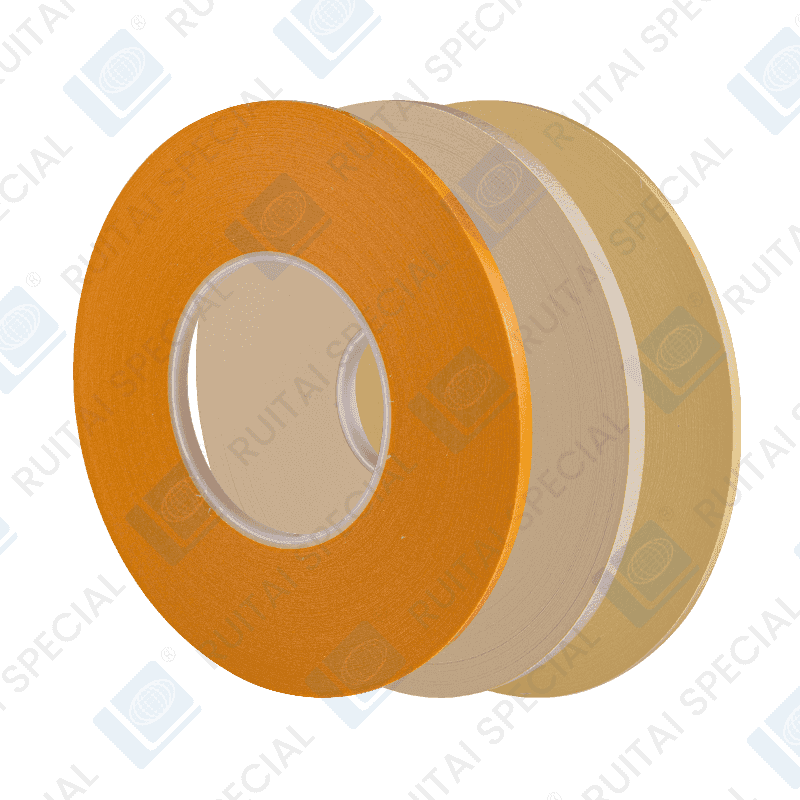
Masking Paper Tape in Electronics Manufacturing: Beyond Basic Masking
In general industrial use, masking tape is often treated as a commodity. In electronics manufacturing, that assumption creates process risk. The surfaces being protected — gold contact pads, plated terminals, bond wire attachment areas — are chemically sensitive, dimensionally precise, and often subjected to elevated temperatures during soldering, reflow, or conformal coating cure cycles. A tape that performs adequately in construction or automotive applications may leave adhesive residue, allow plating bleed-under, or fail to release cleanly when applied to these substrates.
Masking paper tape formulated for electronics applications addresses these demands through controlled adhesive chemistry, crepe paper backing with defined elongation and conformability, and verified resistance to the specific process chemicals — flux activators, plating solutions, and conformal coating solvents — encountered on electronics production lines.
At Ruital Electronics, masking tape development is grounded in the specific process environments of semiconductor and electronic component manufacturing, rather than adapted from general-purpose product lines.
Key Performance Parameters When Selecting Masking Tape for Electronic Processes
Process engineers evaluating masking tape for electronics applications should prioritize the following parameters over cost-per-roll calculations:
| Parameter |
Relevance to Electronics Processes |
Typical Specification Range |
| Maximum service temperature |
Determines suitability for reflow and wave solder masking |
120°C – 260°C depending on grade |
| Adhesive residue after removal |
Critical for gold pads and plated surfaces requiring clean contacts |
Zero residue at rated temperature |
| Bleed-under resistance |
Prevents plating solution or coating from migrating under tape edge |
Verified by edge seal test at process conditions |
| Conformability |
Ensures full contact on curved or stepped substrate surfaces |
Crepe elongation 5% – 15% |
| Ionic contamination level |
Low ionic content prevents electrochemical migration and leakage |
<1.56 µg NaCl equivalent/cm² |
Key masking tape performance parameters and their relevance to electronics manufacturing processes.
Of these, ionic contamination is frequently overlooked during tape qualification. Adhesives with high ionic content can promote electrochemical migration between closely spaced conductors under humid conditions — a failure mode that is difficult to trace back to the masking material used during an earlier process step.
High-Temperature Masking in PCB Assembly and Lead Frame Plating
Two electronics manufacturing processes place the most demanding requirements on masking tape: selective plating of lead frames and connectors, and PCB assembly involving wave soldering or selective soldering operations.
In selective plating, masking tape defines the plating boundary. Any failure of the tape edge seal allows plating solution to wick beneath the tape, depositing metal on surfaces that should remain unplated — a defect that often requires manual rework or causes outright rejection of the part. Tape backing stiffness and adhesive tack must be balanced carefully: sufficient tack to seal against plating bath chemistry, but controlled enough to release without tearing the backing or lifting fragile substrate features.
In wave soldering applications, the tape is exposed to flux activators, preheat zones reaching 130°C–160°C, and solder bath contact at temperatures up to 260°C. General-purpose crepe paper tapes soften and allow adhesive migration under these conditions. High-temperature masking paper tapes use thermally stable acrylic or silicone adhesive systems specifically formulated to maintain bond line integrity through the full wave solder thermal profile, then release cleanly once the board returns to ambient temperature.
Tape Width Tolerances and Edge Quality: Factors That Affect Masking Precision
As electronic components continue to shrink and pad pitches tighten, the dimensional precision of masking tape becomes a process variable rather than a background assumption. Width tolerance directly determines whether a tape strip covers only the intended area or encroaches on adjacent pads, vias, or connector pins.
Slitting quality affects edge definition: a cleanly slit edge produces a straight, well-defined masking boundary, while a torn or fibrous edge creates an irregular border that plating solution or conformal coating can migrate along. For applications requiring masking precision below ±0.5 mm, tape sourced from suppliers with precision slitting capabilities and statistical width control documentation is preferable to standard commercial grades.
Backed by advanced adhesive formulation technology and intelligent production lines, Ruital Electronics produces masking tapes to tight width tolerances with clean-slit edges — supporting the increasingly fine-pitch masking requirements of modern electronic component manufacturing and packaging workflows.


 USA
USA English
 日本語
日本語 中文简体
中文简体