How Heat Activated Cover Tape Works in Tape-and-Reel Packaging
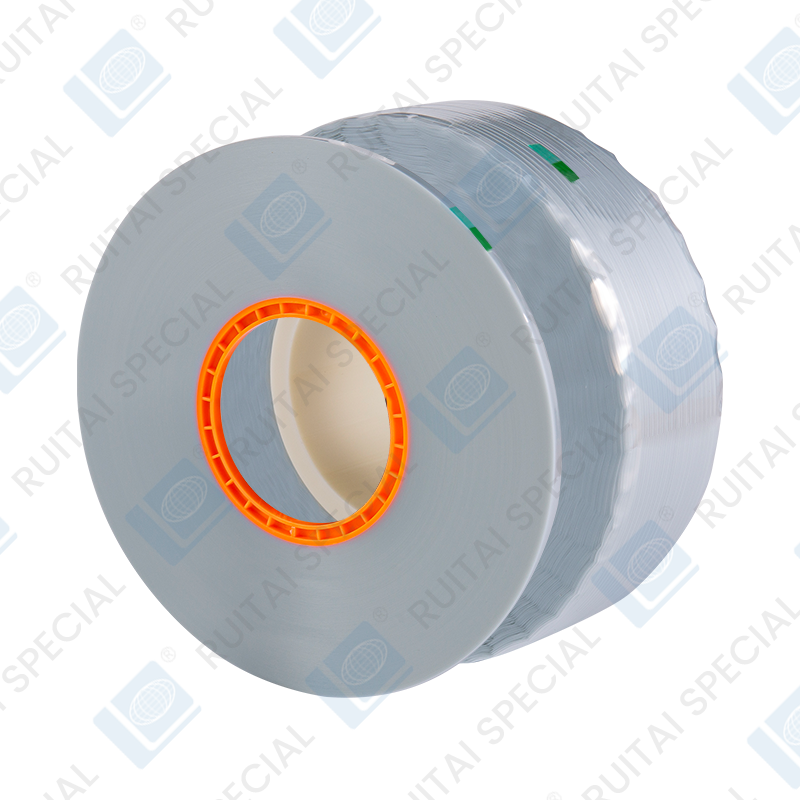
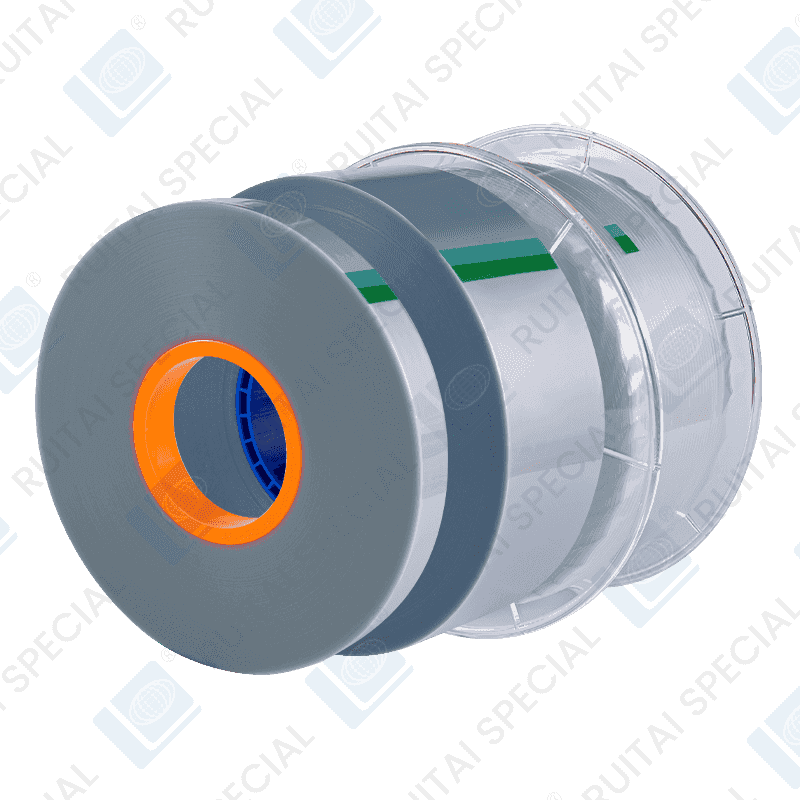
Cover tape sealing technology falls into two broad categories: pressure-sensitive adhesive (PSA) systems that bond on contact, and heat-activated adhesive (HAA) systems that require a defined combination of temperature, pressure, and dwell time to form a seal. In heat activated cover tape, the adhesive layer remains non-tacky at room temperature and only flows and bonds when the sealing bar on a taping machine delivers the specified thermal energy to the tape-carrier interface.
This activation mechanism produces a seal with fundamentally different characteristics from PSA cover tape. Because the adhesive must reach its activation temperature to bond, there is no risk of premature adhesion during storage, handling, or transport of the tape reel prior to use. Once sealed, the bond strength is determined by the sealing parameters rather than by applied pressure, giving process engineers precise control over the peel force delivered to downstream pick-and-place equipment.
Ruital Electronics develops HAA cover tape formulations specifically calibrated to the sealing equipment and carrier tape substrates used across high-volume semiconductor and electronic component packaging lines.
HAA Tape vs. PSA Cover Tape: When Each Technology Is Appropriate
The choice between HAA and PSA cover tape is not simply a preference — it is driven by component characteristics, line speed requirements, and downstream handler specifications. Understanding the trade-offs prevents costly requalification after process changes.
- Component weight and pocket geometry: Heavier components or shallow pocket designs benefit from HAA tape's higher and more consistent seal strength, which prevents pocket opening during reel handling and transport vibration.
- Peel force consistency: HAA systems produce tighter peel force distributions across a reel compared to PSA tapes, which are sensitive to ambient temperature and humidity variation. This consistency is critical for high-speed SMT handlers with narrow peel force acceptance windows.
- Shelf life and storage: HAA tape reels can be stored without special climate controls since the adhesive is inactive at room temperature, reducing storage management overhead in distribution environments.
- Equipment requirement: HAA tape requires a sealing machine with accurate temperature control. Lines without thermal sealing capability must use PSA alternatives, making equipment investment a practical consideration before transitioning tape systems.
For automated, high-volume packaging operations where process stability and peel force repeatability directly affect placement yield, HAA systems typically deliver a lower total cost of quality despite higher per-unit tape cost relative to basic PSA grades.
Sealing Parameter Optimization for HAA Cover Tape
Three interdependent variables govern HAA tape seal quality: sealing temperature, applied pressure, and dwell time. Adjusting any one of these without compensating the others shifts the resulting peel force and seal integrity. Process qualification should establish a validated window for each parameter rather than relying on a single nominal set point.
Common sealing parameter errors and their consequences include:
- Temperature too low: Adhesive does not fully activate, resulting in weak seals that open during reel transport — components lost before reaching the placement machine.
- Temperature too high: Adhesive over-flows beyond the seal area, potentially contaminating component surfaces or bonding to carrier pocket walls, increasing peel force above handler specifications.
- Insufficient dwell time at high line speeds: Thermal energy does not fully penetrate the tape thickness, producing inconsistent seal strength variation across reel length — a common root cause of intermittent placement failures that are difficult to reproduce during troubleshooting.
Qualified sealing windows for HAA tape should be documented with peel force data at the parameter boundary conditions, not just at the nominal center point, to ensure the process remains capable as equipment ages and sealing bar temperature uniformity drifts.
ESD Considerations for HAA Cover Tape in Sensitive Component Packaging
For ESD-sensitive components, the antistatic properties of cover tape must be evaluated independently from its sealing performance. HAA tape constructions are available in both standard and antistatic grades, with surface resistance values in the dissipative range (1 × 10⁴ to 1 × 10¹¹ Ω/sq) to meet ANSI/ESD S541 requirements for component packaging materials.
A critical but frequently overlooked interaction occurs between the heat activation process and antistatic performance. Elevated sealing temperatures can alter the distribution of antistatic agents within the adhesive layer or cause surface migration of additives that affects measured surface resistance. Process qualification for antistatic HAA tape should therefore include surface resistance measurements taken from sealed reels — not just from unprocessed tape — to confirm that the thermal sealing step does not degrade the ESD protection the tape is specified to provide.
With advanced adhesive formulation technology and rigorous quality protocols, Ruital Electronics verifies both sealing performance and antistatic compliance across production batches, ensuring that HAA cover tape delivered to customers meets the full combination of mechanical and ESD requirements demanded by semiconductor packaging applications.


 USA
USA English
 日本語
日本語 中文简体
中文简体