
 USA
USA English
 日本語
日本語 中文简体
中文简体
Content
What Is Pressure Sensitive Tape
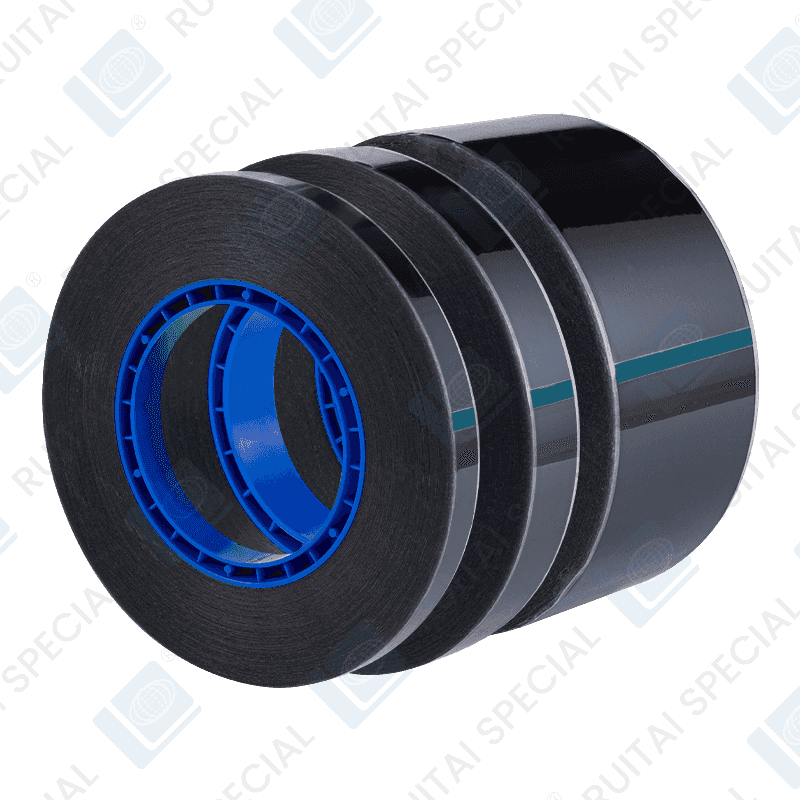
Pressure sensitive tape is an adhesive-backed substrate that bonds to a surface through applied hand or mechanical pressure alone — no heat, water, or solvent activation is required. The bond forms instantly on contact and holds without any chemical curing reaction taking place after application. This combination of immediate tack, sustained adhesion, and clean removability (in repositionable grades) makes pressure sensitive adhesive tape one of the most widely deployed fastening materials across packaging, electronics, automotive assembly, construction, and medical device manufacturing.
A standard tape pressure sensitive adhesive construction consists of three functional layers: the carrier or backing (film, foam, paper, foil, or non-woven fabric), the adhesive coat applied to one or both faces of the carrier, and a release liner that protects the adhesive during storage and handling. Each layer is engineered independently to meet the performance requirements of the target application — altering any one of them changes the tape's mechanical behaviour, temperature resistance, chemical compatibility, and end-of-life recyclability profile.
How Does Pressure Sensitive Adhesive Work
Understanding how pressure sensitive adhesive works requires distinguishing between two simultaneous physical phenomena: surface wetting and viscoelastic deformation. When the tape is pressed against a substrate, the adhesive — a soft, permanently tacky polymer — flows at a microscopic level to conform to the surface topography of both the tape backing and the substrate. This intimate molecular contact maximises the interfacial area available for van der Waals forces to operate across.
The adhesive's viscoelastic character is what makes pressure sensitivity possible. Viscoelastic materials exhibit both liquid-like (viscous) and solid-like (elastic) behaviour depending on the timescale and rate of deformation applied to them:
- During application — the adhesive behaves predominantly as a viscous liquid, flowing under light pressure to wet the substrate and maximise contact area.
- Under sustained static load — the elastic component dominates, resisting creep and maintaining bond integrity over time.
- During rapid peel — the high-rate elastic response dissipates energy across the adhesive bulk, requiring substantial force to propagate the peel front and separate the bond.
Three measurable properties define adhesive performance: tack (the force required to separate the adhesive from a surface after very brief contact), peel adhesion (the force required to remove the tape at a defined angle and peel rate, typically 180° at 300 mm/min per PSTC-101 or AFERA 5001), and shear resistance (the load a bonded tape specimen can sustain in a direction parallel to the substrate before the adhesive flows or the bond fails). Formulators balance these three properties against each other — increasing crosslink density to improve shear resistance, for instance, typically reduces initial tack.
Adhesive Chemistry: Acrylic, Rubber, and Silicone Compared
The performance envelope of any pressure sensitive adhesive tape is determined primarily by its adhesive chemistry. The three dominant chemistries serve distinct application windows.
| Chemistry | Temperature Range | UV / Oxidation Resistance | Initial Tack | Typical Use Cases |
|---|---|---|---|---|
| Acrylic | −40 °C to +150 °C | Excellent | Medium | Outdoor signage, automotive trim, electronics assembly, long-term bonding |
| Natural / Synthetic Rubber | −20 °C to +80 °C | Poor to moderate | High | Packaging, masking, carton sealing, general industrial |
| Silicone | −60 °C to +260 °C | Outstanding | Low to medium | High-temperature masking, aerospace, medical sterilisation environments |
Rubber-based adhesives deliver the highest immediate tack and perform well on low-surface-energy substrates at ambient temperatures, but degrade under prolonged UV exposure and elevated heat. Acrylic adhesives — both solvent-based and water-based emulsion grades — resist aging, plasticiser migration, and outdoor weathering, making them the standard choice wherever long service life is a requirement. Silicone adhesives command a significant cost premium but are irreplaceable in high-temperature applications above 150 °C where both acrylic and rubber chemistries lose cohesive strength.
Double Sided Pressure Sensitive Adhesive Tape: Construction and Selection
Double sided pressure sensitive adhesive tape extends the core bonding mechanism to two active faces, enabling substrate-to-substrate bonding without visible fasteners or wet adhesives. The construction varies significantly depending on whether a carrier is present and what mechanical role it plays in the bond.
The principal construction types are:
- Tissue-core double-sided tape — A thin tissue carrier coated on both faces with adhesive. Produces the lowest caliper profile, suitable for splicing, label mounting, and graphic arts applications where bond-line thickness must be negligible.
- Film-core double-sided tape — PET, PE, or PP film carriers provide dimensional stability and controlled conformability. The film resists elongation under shear load, making this construction suitable for die-cutting and precision part assembly.
- Foam-core double-sided tape — Open or closed-cell foam carriers (PE, acrylic foam, PU) add gap-filling capability, vibration damping, and compliance over irregular surfaces. Acrylic foam tape in this category achieves bond strengths approaching structural adhesives — sufficient for automotive body panel attachment and architectural façade glazing.
- Transfer tape (no carrier) — Pure adhesive film supported only by the release liner, transferred directly to the substrate. Delivers maximum conformability and the thinnest possible bond line, used extensively in electronics lamination and membrane switch assembly.
Selecting the correct double sided pressure sensitive adhesive tape requires specifying not only the adhesive chemistry but also the carrier construction, adhesive coat weight on each face (which need not be identical — differential-adhesion tapes intentionally apply a lower-tack coat to the liner-side face for repositionability), and the liner release value, which determines how easily the tape feeds through automated dispensing equipment.
Key Factors That Affect Bond Performance in Service
Even a correctly specified pressure sensitive tape will underperform if application conditions fall outside the adhesive's design envelope. The variables that most commonly cause in-service bond failure are substrate surface energy, application temperature, dwell time before load application, and long-term environmental exposure.
Surface energy is the single most important substrate variable. High-surface-energy materials — glass, stainless steel, aluminium — wet easily and support strong adhesive contact. Low-surface-energy plastics such as polyethylene (PE, ~31 mN/m), polypropylene (PP, ~29 mN/m), and PTFE (~18 mN/m) resist wetting and require either specialised low-surface-energy adhesive formulations or surface pre-treatment (corona, flame, or plasma treatment) to achieve reliable bond strength. Contamination from mould release agents, machining oils, or finger contact introduces a low-energy layer even on nominally high-energy substrates — surface cleaning with isopropanol before tape application is standard practice in quality-critical assembly.
Application temperature affects adhesive flow during bonding. Most acrylic and rubber adhesives are specified for application above 10 °C; below this threshold, the adhesive stiffens, wetting is impaired, and initial tack values drop significantly. In cold-chain packaging and outdoor construction applications where tape must be applied in sub-ambient conditions, cold-temperature adhesive grades with lower glass transition temperatures (Tg) are required.
Dwell time — the period between tape application and load application — allows the adhesive to continue flowing and building contact area with the substrate. Full bond strength for most pressure sensitive adhesive tapes is achieved after 24–72 hours at room temperature, not at the moment of application. Specifying immediate load-bearing capacity without accounting for dwell time is a common over-specification error that leads to unnecessary rejection of materials that would have met requirements under standard test conditions.