
 USA
USA English
 日本語
日本語 中文简体
中文简体
Content
- 1 What Is Heat Activated Adhesive
- 2 How Heat Activated Adhesives Work
- 3 Heat Activated Adhesive vs Pressure Sensitive Adhesive
- 4 Hot Melt Adhesive vs Heat Activated Adhesive
- 5 Thermoset vs Thermoplastic Adhesives
- 6 Heat Activated Adhesive Film Guide
- 7 Benefits of Heat Activated Adhesives
- 8 Heat Activated Adhesive Applications
- 9 Heat Activated Adhesives for Textile Lamination
- 10 How to Choose the Right Heat Activated Adhesive
What Is Heat Activated Adhesive
A heat activated adhesive is a bonding material that remains dry, non-tacky, and inert at room temperature, then develops adhesive strength when exposed to a defined temperature threshold—typically between 60°C and 200°C depending on the formulation. The heat either melts a thermoplastic polymer or triggers a chemical crosslinking reaction in a thermoset system, creating a bond with the substrate upon cooling or curing.
This on-demand activation mechanism offers a fundamental handling advantage: the adhesive can be pre-applied to a substrate, stored, shipped, and later bonded under controlled conditions without premature tack or contamination. It is this quality that makes heat activated systems standard in high-volume lamination, apparel manufacturing, automotive interior assembly, and electronics bonding—anywhere that clean handling and reproducible bond quality are non-negotiable.
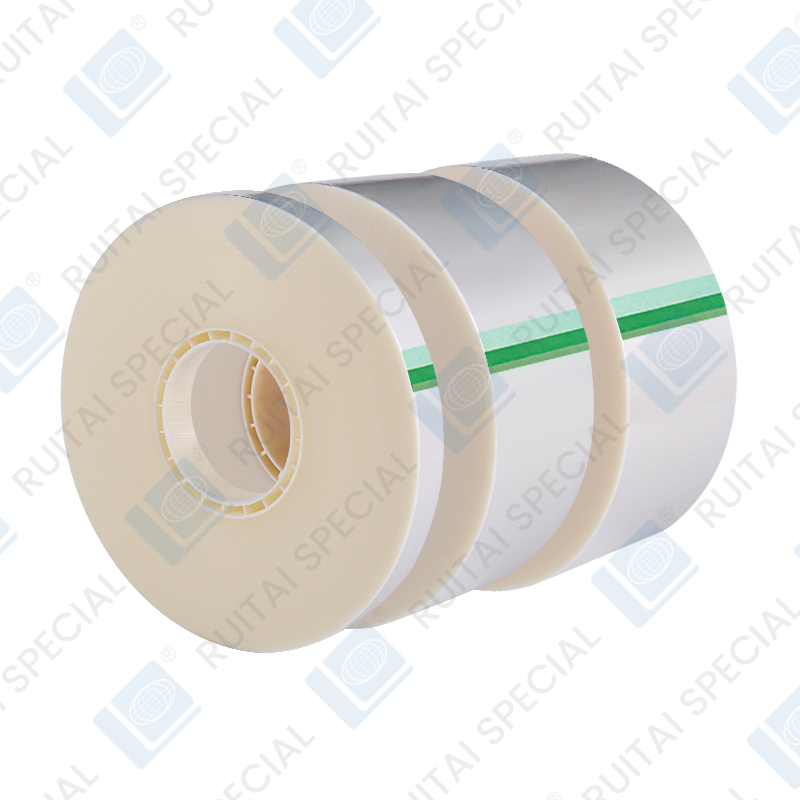
Heat activated adhesives are available in multiple physical forms: films, webs, powders, pellets, and solution-coated carriers. Film and web formats dominate precision lamination applications because they deliver consistent adhesive weight per unit area, sharp bond boundaries, and no need for wet adhesive handling.
How Heat Activated Adhesives Work
The bonding mechanism depends on the polymer chemistry involved, but the general process follows three stages: activation, wetting, and solidification.
Activation
When the adhesive reaches its activation temperature, either the polymer chains become mobile (thermoplastics) or reactive functional groups begin to crosslink (thermosets). In thermoplastic systems, this transition is reversible—cooling re-solidifies the adhesive. In thermoset systems, the reaction is irreversible once complete.
Wetting and Flow
In the activated (fluid) state, the adhesive flows into the micro-topography of both substrate surfaces under applied pressure. This physical contact maximizes the interfacial area for molecular adhesion. Bond strength is highly sensitive to the combination of temperature, pressure, and dwell time—all three parameters must be optimized together, not individually.
Solidification and Bond Formation
As the assembly cools (or as crosslinking completes), the adhesive solidifies under pressure to form the final bond. Maintaining pressure during cooling prevents bond-line porosity and substrate spring-back that would reduce peel strength. For thermosets, a post-cure cycle at elevated temperature may be required to reach full bond performance.
Heat Activated Adhesive vs Pressure Sensitive Adhesive
Pressure sensitive adhesives (PSAs) and heat activated adhesives serve fundamentally different bonding needs. Understanding where each excels prevents misapplication.
| Property | Heat Activated Adhesive | Pressure Sensitive Adhesive |
|---|---|---|
| Activation trigger | Heat (+ pressure) | Light finger pressure at ambient temperature |
| Room-temperature tack | None | Permanent tack |
| Bond strength | High to very high (structural capable) | Moderate; removable to permanent grades |
| Heat resistance | Typically good to excellent | Limited; many PSAs soften above 70–90°C |
| Repositionability | Not possible after bonding | Possible with removable grades |
| Pre-application handling | Clean, no liner needed in many forms | Requires release liner |
| Typical uses | Lamination, textile bonding, automotive trim | Labels, tapes, light assembly, medical patches |
The critical differentiator for manufacturing applications is bond permanence under thermal and mechanical stress. PSAs are engineered around viscoelastic flow that enables both tack and repositioning; this same property limits their performance at elevated temperatures or under sustained shear loads. Heat activated adhesives, once set, do not exhibit this creep behavior to the same degree—making them the correct specification for bonded assemblies that must survive heat, chemical exposure, or dynamic loading in service.
Hot Melt Adhesive vs Heat Activated Adhesive
The terms are related but not interchangeable. All hot melt adhesives are heat activated, but not all heat activated adhesives are hot melts. The distinction matters for process design.
Hot melt adhesives are applied in the molten state—dispensed as a liquid at 120–200°C onto one substrate, then a second substrate is pressed into contact while the adhesive is still fluid. Bonding occurs as the adhesive cools and solidifies. Hot melts require dispensing equipment (gun, slot-die coater, or roll coater) and tolerate very short open times—typically 5–60 seconds. They are widely used in packaging, bookbinding, woodworking, and non-woven lamination.
Heat activated adhesives in film or web form are pre-applied or interleaved between substrates at room temperature, then activated by a heated press or laminator. The adhesive never needs to be handled in a molten state on the production floor. Open time is not a constraint because the adhesive is solid until the press cycle begins. This makes film-format heat activated adhesives better suited to clean-room environments, precision electronics assembly, and apparel lamination where molten adhesive handling and pot-life management would introduce process variability.
From a chemistry standpoint, both categories cover thermoplastic and thermoset formulations. However, reactive thermoset hot melts—such as polyurethane reactive (PUR) adhesives—are increasingly common in woodworking and automotive applications, offering the processing convenience of hot melt dispensing with the chemical resistance and heat resistance of a crosslinked thermoset bond after curing.
Thermoset vs Thermoplastic Adhesives
The polymer architecture of a heat activated adhesive determines its bond behavior in service—particularly its response to heat, chemicals, and sustained mechanical load.
Thermoplastic Adhesives
Thermoplastic adhesives soften and flow reversibly when heated, then re-solidify on cooling. Common polymer bases include polyamide (PA), polyester (PES), polyurethane (PU), ethylene-vinyl acetate (EVA), and polyolefins. They bond quickly and support high-speed lamination processes because no chemical reaction is required—just thermal cycling.
The limitation is that the bond softening point is the same as the processing temperature. A polyamide adhesive with a 130°C activation point begins to lose peel strength when the bonded assembly approaches that temperature in service. For most textile, apparel, and packaging applications, this is not a concern. For under-hood automotive or industrial applications routinely exposed to 150°C+, thermoplastics must be carefully selected or replaced with thermoset alternatives.
Thermoset Adhesives
Thermoset adhesives undergo an irreversible chemical crosslinking reaction when activated, forming a three-dimensional polymer network that cannot be re-melted. Common chemistries include epoxy, phenolic, cyanate ester, and bismaleimide systems. Thermosets deliver superior heat resistance, chemical resistance, and creep resistance compared to thermoplastics at equivalent bond-line thickness.
The trade-off is processing complexity. Thermoset adhesives require precise temperature control to initiate crosslinking without under-curing (weak bond) or overcuring (brittle bond), and they typically need longer press cycles. Shelf life must also be managed—reactive formulations continue to crosslink slowly at room temperature, particularly at elevated humidity. Cold storage extends shelf life for single-component thermoset films.
Hybrid formulations combining thermoplastic flow behavior with thermoset final properties—such as two-stage cure epoxy-polyester films—are increasingly used in aerospace composite bonding and high-performance electronics packaging where both processability and end-use performance are critical.
Heat Activated Adhesive Film Guide
Adhesive films are the most precisely engineered format of heat activated adhesive, offering uniform thickness, controlled adhesive weight, and clean handling. Selecting the right film requires understanding the available formats and their operating parameters.
Continuous Film vs Web (Nonwoven)
Continuous cast films provide a complete adhesive layer with no gaps—appropriate for impermeable laminates, moisture barriers, and applications requiring consistent peel strength across the entire bond area. Nonwoven (web) formats are porous, allowing moisture vapor and air to pass through the bond line. Web adhesives dominate breathable apparel lamination (outerwear, sportswear, medical textiles) where moisture management is a design requirement.
Key Film Specification Parameters
- Activation temperature: The minimum temperature required for adequate polymer flow and substrate wetting. Typical ranges: low-activation EVA (70–90°C), polyester (100–130°C), polyamide (110–150°C), epoxy thermoset (140–180°C).
- Coat weight (g/m²): Determines adhesive volume available for substrate wetting. Typical range is 15–100 g/m²; porous or rough substrates require higher coat weights to fill surface texture.
- Melt viscosity: Governs how much the adhesive flows under press pressure. Low-viscosity grades penetrate fibrous substrates well but may bleed at edges or strike through open-weave textiles.
- Bond strength: Reported as peel (N/25mm or N/50mm) and shear strength. Always verify on the actual substrate combination under representative press conditions—adhesive datasheets use standard test substrates.
- Chemical resistance: Dry-cleaning, laundering, UV exposure, and solvent resistance must align with the end product's service environment.
- Film carrier or liner: Some films are self-supporting; others are coated onto a release liner or carrier that must be removed before or after bonding.
Benefits of Heat Activated Adhesives
The adoption of heat activated systems across diverse industries is driven by a combination of process, performance, and environmental advantages that liquid adhesives and PSAs cannot replicate simultaneously.
- Clean, solvent-free handling: Most heat activated films and webs are 100% solid—no solvents to manage, no VOC emissions, and no wet-adhesive containment requirements. This simplifies regulatory compliance and reduces worker exposure concerns.
- Precise bond-line control: Film and web formats deliver defined adhesive weight within ±2–5 g/m², enabling consistent bond strength across production runs. Liquid adhesive dispensing cannot match this uniformity without sophisticated metering equipment.
- Extended shelf and pre-assembly life: Parts can be pre-loaded with adhesive film and stored for days or weeks without degradation (especially thermoplastic grades). This decouples adhesive preparation from final bonding in lean manufacturing workflows.
- High bond strength with thin bond lines: Heat activated films routinely achieve structural peel strengths exceeding 100 N/25mm at bond-line thicknesses of 25–75 µm—thinner and stronger than equivalent liquid adhesive layers after solvent flash-off.
- Automation compatibility: Roll-format films feed directly into automated lamination lines, press equipment, and robotic assembly cells with no adhesive dispensing nozzle maintenance or pot-life monitoring.
- Wide substrate compatibility: Properly formulated grades bond textiles, foams, films, metals, ceramics, glass, and composites—often in combinations that are difficult to bond with single-component liquid adhesives.
Heat Activated Adhesive Applications
Heat activated adhesives appear across virtually every manufacturing sector where two or more materials must be permanently bonded without fasteners, stitching, or liquid adhesive complexity.
Apparel and Technical Textiles
Seamless bonding of outerwear shells to membrane laminates, collar and cuff reinforcement, logo application, and waistband construction are primary uses. Heat activated web adhesives enable seam-sealed waterproof garments and stretch-bonded athletic wear that would be structurally compromised by conventional stitching.
Automotive Interiors
Headliners, door panels, instrument panel skins, carpet systems, and seat foam lamination rely on heat activated adhesives to bond multi-layer assemblies that must survive 100°C+ in-vehicle temperatures, UV exposure, and long-term vibration fatigue without delamination or odor generation.
Electronics and Flex Circuits
Flexible printed circuit (FPC) laminates, cover-lay films, and rigid-flex bonding sheets use thermoset heat activated adhesive films because they provide void-free bond lines at 0.025–0.05mm thickness, survive solder reflow temperatures, and maintain dimensional stability across thermal cycling.
Footwear Manufacturing
Upper-to-midsole bonding, toe box stiffening, lining attachment, and decorative overlay application use heat activated systems to achieve the high peel strengths required in footwear durability testing—often exceeding 4 N/mm²—with clean, automated processes.
Aerospace Composites
Film adhesives based on epoxy, bismaleimide, and cyanate ester chemistries bond carbon fiber composite skins to honeycomb core in aircraft panels. These structural adhesive films are co-cured with the composite lay-up in autoclave processes, delivering continuous bond lines with aerospace-grade lap shear strength and peel resistance.
Heat Activated Adhesives for Textile Lamination
Textile lamination is one of the largest and most technically demanding applications for heat activated adhesives. The challenge is bonding substrates with widely varying surface energy, stretch, porosity, and sensitivity to heat—while maintaining hand feel, drape, and wash durability.
Two-Layer and Three-Layer Laminates
Two-layer laminates bond an outer shell fabric to a functional membrane (ePTFE, polyurethane, or polyester microporous film) using a heat activated web adhesive. Three-layer constructions add an inner lining or fleece backer, requiring a second adhesive layer. Coat weight selection is critical: insufficient adhesive causes delamination in wash tests; excessive adhesive blocks the membrane's breathability pores and reduces moisture vapor transmission rate (MVTR).
Adhesive Chemistry Selection for Textiles
- Polyurethane (PU) webs: The dominant choice for performance outerwear. Excellent elasticity matches stretch fabrics; good wash resistance (ISO 6330 60°C cycles); activation at 120–140°C. Compatible with ePTFE and polyester membranes.
- Polyamide (PA) webs: Higher activation temperature (130–160°C); stiffer bond line; better dry-clean solvent resistance than PU. Used in structured apparel (tailoring interlinings, workwear) where dimensional stability matters more than stretch.
- Polyester (PES) webs: Broad chemical resistance; good compatibility with polyester and nylon face fabrics; activation at 110–130°C. Preferred for technical filtration media lamination and industrial textile assemblies.
- EVA webs: Low activation temperature (80–100°C); economical; suitable for heat-sensitive substrates like polyolefin membranes. Lower wash durability than PA or PU—typically limited to non-wash or dry-clean-only applications.
Process Parameters for Textile Lamination
Flatbed presses and continuous belt laminators are the primary processing equipment. Key parameters are press temperature (measured at the nip or platen surface, not the heater setpoint), pressure (typically 0.2–0.5 MPa for most textile assemblies), and dwell time (3–30 seconds depending on the substrate stack and adhesive). Inadequate dwell time is the most common cause of first-wash delamination in production troubleshooting—it is always the first variable to review before changing adhesive grade or coat weight.
How to Choose the Right Heat Activated Adhesive
Selecting a heat activated adhesive is a multi-variable decision. A systematic specification process reduces the risk of costly reformulation or product performance failures downstream.
- Define the substrate pair: Surface energy, porosity, heat sensitivity, and surface roughness of both substrates determine compatible adhesive chemistry and required coat weight. Low-surface-energy substrates (polyolefins, silicone coatings) require primers or specialized tie-layer formulations.
- Establish end-use performance requirements: Document minimum peel and shear strength, operating temperature range, chemical and solvent exposure, wash/dry-clean cycles, and any regulatory requirements (food contact, skin contact, RoHS, REACH). These specifications filter chemistry options before any other consideration.
- Assess processing equipment limits: Maximum achievable press temperature, available pressure, and cycle time constraints directly limit which adhesive activation ranges are feasible. A high-performance thermoset film requiring 180°C is unusable if the production press maxes at 150°C.
- Choose thermoplastic or thermoset: If the bonded assembly must withstand temperatures approaching the activation temperature in service, thermoset chemistry is required. For most textile, packaging, and light-assembly applications, thermoplastic grades are preferred for their simpler processing.
- Select film format: Continuous film for impermeable bonds; nonwoven web for breathable assemblies; powder for complex 3D geometries or cost-sensitive high-volume applications where film waste is a concern.
- Determine coat weight: Start with the supplier's recommendation for the substrate combination, then validate wash or service durability before committing. Reduce coat weight only after durability is confirmed—never as a first-pass cost-reduction measure.
- Validate with production-representative trials: Bench-press trials with laboratory heat sealers provide directional data but do not replicate the temperature uniformity, pressure distribution, or substrate handling of production equipment. Full process validation on production equipment is required before mass production release.
Engaging the adhesive supplier's technical team early in the development process—rather than treating adhesive selection as a procurement decision—consistently produces better outcomes. Most specialist adhesive suppliers offer application testing services and can provide formulation adjustments to activation temperature, melt viscosity, or open time that are not visible in standard product datasheets.